
Short answer
White vinegar dissolves the mineral scale clogging your showerhead. Soak a few hours, scrub the nozzles, and rinse — most weak sprays come back to full force.
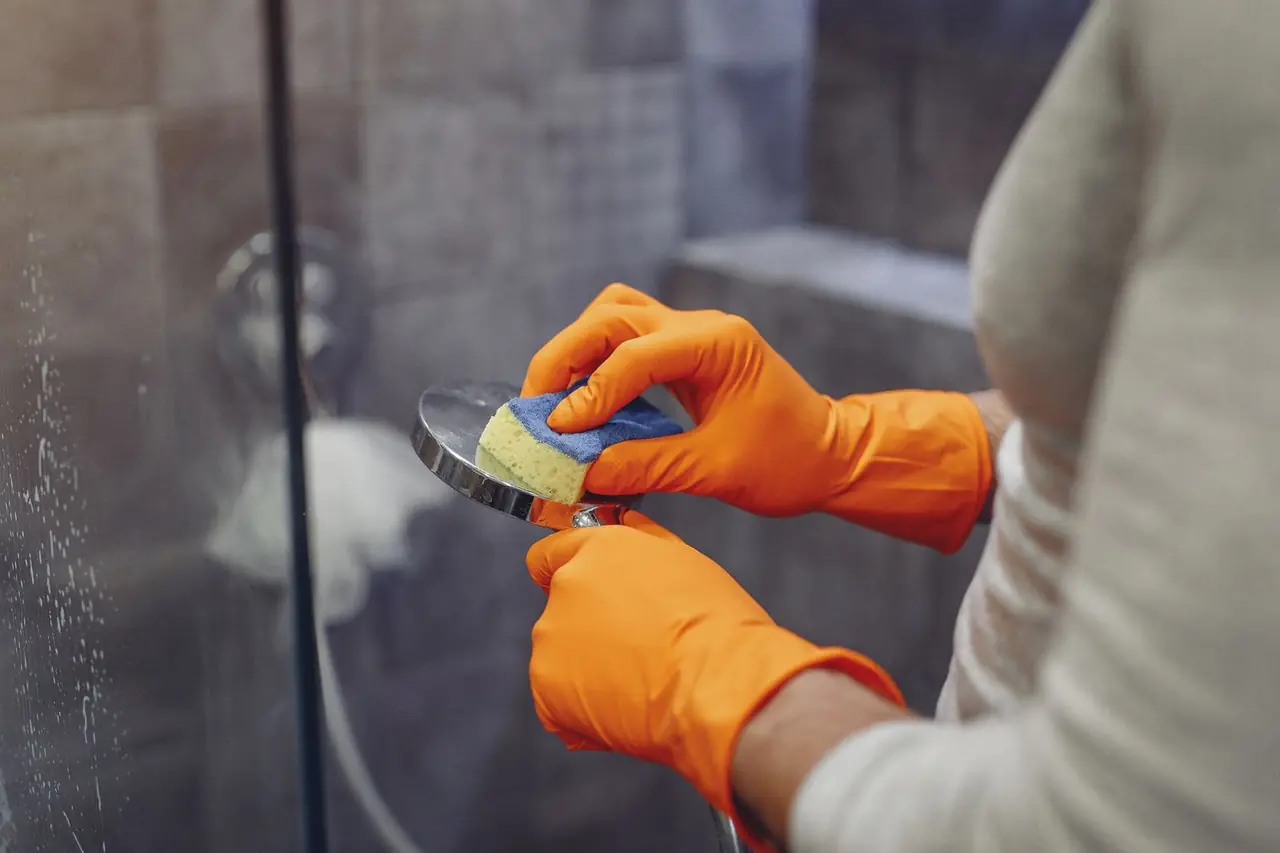
How to tell mineral buildup is the problem
Mineral buildup announces itself in the spray. Some jets stop flowing entirely while others shoot sideways, the stream feels thin even with the handle fully open, or the water pulses instead of running steady. Look closely at the face of the showerhead: a white, chalky crust around the nozzles is limescale, the dried residue of calcium and magnesium left behind when hard water evaporates.
The key test is whether the problem is local. If the bathroom sink and the kitchen tap run at normal pressure but the shower is weak, the restriction is almost certainly in the showerhead itself. If every fixture in the house is weak, the cause is upstream — a partially closed valve, a pressure regulator, or a supply issue — and no amount of cleaning the showerhead will fix it. Our low-water-pressure guide walks through those whole-house checks.
Buildup is worst in hard-water homes, where the water carries more dissolved minerals. It also builds faster on showerheads that sit unused for a while, such as a guest bathroom, because water left standing in the head evaporates and leaves its minerals behind. A showerhead that has never been cleaned in five years can lose a surprising share of its flow to scale you cannot even see from the outside.
What you need before you start
You need very little, and you probably already have most of it. Plain white vinegar is the workhorse — buy the cheapest jug, because you need enough to submerge the showerhead or fill a bag around it. You will also want a sturdy plastic bag and a rubber band or zip tie, an old toothbrush, a wooden toothpick or a sewing pin, a soft rag, an adjustable wrench, and a roll of plumber's tape (also called Teflon tape) if you plan to remove the head.
Skip the harsh stuff. Bleach does nothing to mineral scale, and it can damage finishes and rubber parts. Strong acid descalers work, but they are easy to overdo on plated finishes — vinegar is slower but safe on chrome, nickel, stainless steel, and most brass. If your showerhead has a special finish such as oil-rubbed bronze or matte black, check the manufacturer's care instructions first; vinegar is usually fine for a few hours, but an overnight soak on a delicate finish is worth avoiding.
One more thing before you start: decide whether you are cleaning it in place or taking it off. The bag method below works without removing anything and is the right first step for most people. Removing the head gives a deeper clean and lets you reach the filter screen, but it means handling the connection — keep the rag and the plumber's tape handy if you go that way.
Method 1: the vinegar-bag soak (no tools needed)
This is the easiest version, and it fixes most clogged showerheads. Fill a plastic bag with enough white vinegar to cover the whole showerhead face, then lift the bag up around the head and secure it tightly to the shower arm with a rubber band or zip tie. The head must be fully submerged — if the bag sags and leaves the top nozzles dry, add more vinegar or use a smaller bag.
Leave it to soak for two to four hours for a mild clog. For a head that has been crusty for years, leave it overnight — eight hours gives the vinegar time to dissolve the thickest scale. You will often see tiny bubbles rising as the acid works; that is the scale dissolving, and it is a good sign.
When the soak is done, remove the bag and turn the shower on full for a minute or two to flush out the loosened scale and vinegar. Then scrub the face with the old toothbrush, paying attention to the rim of each nozzle. Run the water again and check the spray pattern. If every jet is firing straight and the pressure feels right, you are done — no tools touched, no parts removed.
Method 2: remove the showerhead for a deep clean
If the bag soak only partly helps, take the head off. Make sure the shower valve is off — there is no need to shut off the house water for this job. Wrap a rag around the nut where the showerhead meets the arm to protect the finish, then turn the nut counterclockwise with the adjustable wrench. Hold the shower arm steady with your other hand so you do not twist the arm itself loose from the wall.
Once it is off, submerge the whole head in a bowl or bucket of undiluted white vinegar. A few hours is enough for most heads; leave it overnight for heavy scale. While it soaks, look inside the connection end: there is usually a small mesh filter screen and a rubber washer in there. Pull the screen out carefully and rinse it under running water — it catches grit and scale, and a blocked screen alone can strangle the flow.
After soaking, scrub the head with the toothbrush, inside and out, and poke each nozzle hole gently with a wooden toothpick or a pin to clear any scale the vinegar loosened but did not dissolve. Do not force the pin or ream the holes wider; you only want to dislodge the crust, not reshape the nozzle. Rinse everything thoroughly, then check the rubber washer — if it is cracked, flattened, or hard, replace it before reinstalling, because a worn washer is the usual cause of a drip at the connection.
Cleaning the nozzles and the filter screen
The nozzles deserve their own attention because they are where the clog lives. Many modern showerheads have soft rubber nozzles — you can rub them with your thumb while the water runs and feel the scale crack off in small flakes. That quick rub is worth doing every few weeks as maintenance; it takes ten seconds and keeps scale from ever hardening into a real clog.
For fixed metal nozzles, the pin does the work. Work gently, one hole at a time, and rinse as you go so loosened grit washes out instead of settling back in. If the head has a removable faceplate — some do, with screws on the back — you can take it apart for a full clean, but only if the manufacturer designed it that way. Forcing apart a sealed head will break it.
Do not forget the filter screen at the inlet. It is easy to overlook because it hides inside the connection, but a screen choked with grit and scale restricts flow just as surely as clogged nozzles do. Rinse it, brush it gently, and seat it back in place before reinstalling. If the screen is torn or corroded, a replacement costs very little at a hardware store — bring the old one to match the size.
Rinse, reinstall, and test
Before you put the head back on, flush the shower arm itself. With the head off, turn the shower on briefly and let water run out of the open arm for a few seconds. This clears any grit that was sitting in the arm, so it does not wash straight into your freshly cleaned head.
Wrap the threads of the shower arm with plumber's tape — three or four wraps, in the same direction the head screws on, pulled snug. The tape seals the connection and is what stops the slow drip many people notice after removing a showerhead. Then thread the head back on by hand until it is snug, and give it a final quarter-turn with the wrench over the rag. Do not overtighten: a cracked fitting leaks worse than a loose one.
Turn the shower on and watch the connection for a minute. A drip there usually means the tape is missing, the washer is worn, or the head is not seated straight — take it off, redo the tape, and try again. Then check the spray: every jet should fire straight and evenly, and the flow should feel like it did when the head was new. If some jets are still dead after a full soak and a scrub, the nozzles may be worn or internally corroded, and it is time to replace the head rather than clean it again.
When cleaning will not fix it — and how to keep it clean
Cleaning fixes scale, but it cannot fix everything. If the showerhead is old and the nozzles are pitted or corroded inside, no soak will restore the spray — replacement is the honest answer, and a basic showerhead is inexpensive. If the pressure is low at every fixture, the problem is not the head at all; check that the main valve is fully open and look at the pressure regulator and the whole-house causes in our low-water-pressure guide.
Another possibility is the shower valve cartridge behind the handle. A failing cartridge can restrict flow to one shower even when the head is clean. If a new or freshly cleaned head still gives a weak spray while the tub spout in the same bathroom runs strong, the cartridge is the likely suspect — that is a plumber's job, because it involves opening the valve body.
Prevention is mostly habit. In a hard-water home, rub the rubber nozzles with your thumb once a month and give the head a vinegar soak every three to six months, before the scale hardens. Wiping the face dry after a shower slows buildup. A water softener or a whole-house filter reduces scale everywhere in the home, not just the shower, but that is a bigger decision — worth discussing with a plumber if scale keeps coming back fast, if the water heater is also scaling up, or if you are replacing fixtures more often than you should be.