Short answer
Find your main shutoff before an emergency: check the meter box near the street, where the supply line enters your home, or near the water heater. Turn the valve clockwise — a quarter-turn for ball valves, several turns for gate valves — then open the lowest faucet to confirm the water stops.
Where to look
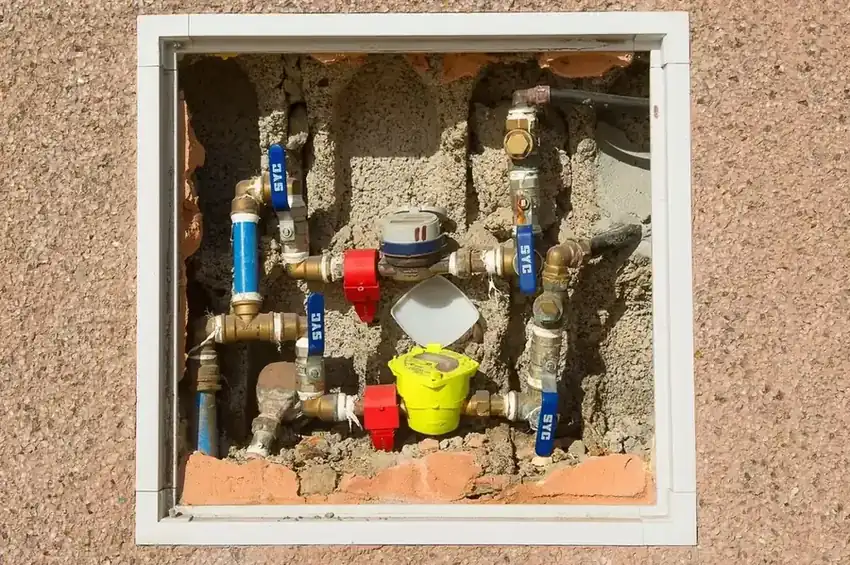
There are three usual suspects. First, the water meter box: a ground-level box near the street or sidewalk, often marked 'water' — you may need a meter key or a long screwdriver to lift the lid. Second, where the supply line enters your home, commonly the garage, utility closet, basement, or crawl space. Third, near the water heater, where many homes have an additional shutoff on the cold supply line.
Go find yours on a calm Saturday, not during a leak. Clear any clutter around it, and make sure everyone in the household old enough to turn a valve knows where it is. In a real emergency, the person home alone is the one who needs this knowledge.
Ball valve vs. gate valve
Modern shutoffs are ball valves: a lever handle that turns just a quarter-turn, so the handle sits across the pipe when closed and in line with it when open. Older homes often have gate valves: a round wheel handle that takes several full turns clockwise to close.
Gate valves are notorious for seizing up after years of sitting open, and their internal washers can fail. Test yours now — gently. If it will not budge or it drips from the stem when you turn it, that is a repair to schedule on purpose, not to discover during a flood. A plumber can replace a failing gate valve with a ball valve in one visit.
Fixture shutoffs worth knowing
You do not always need the main. Every sink and toilet should have small shutoff valves on its supply lines — under the sink, behind the toilet near the floor. Washing machines have hot and cold valves at the laundry box, and dishwashers usually have one under the sink.
Also learn the water heater shutoff (cold inlet, top of the tank) and the irrigation system shutoff if you have sprinklers. A burst washing-machine hose is stopped at the laundry valves in seconds; running to the street meter wastes the minutes that matter.
After you shut it off
Open the lowest faucet in the house to drain pressure from the lines — an outdoor spigot or a downstairs tub works. Water will sputter and spit air as the lines drain; that is normal. Leave a faucet or two open while the water is off so expanding air and residual water have somewhere to go.
When the repair is done and you turn the water back on, do it slowly, then work through the house opening faucets one at a time to purge trapped air. Expect sputtering and cloudy water for a minute or two — that is just air leaving the lines, and it clears on its own.
If the valve will not budge
Do not attack a stuck valve with a cheater bar or excessive force — snapping a corroded valve body turns a planned repair into an emergency with water you cannot stop. If the house-side valve is stuck, the water utility can shut off the street-side valve at the meter while a plumber replaces yours.
The same goes for a valve that closes but keeps seeping: the internal seal has failed. Note it, leave the valve alone, and schedule the replacement. A shutoff you cannot trust is barely better than no shutoff at all.